Lamb Chops: Your Complete Guide to Cuts, Cooking and Seasoning
Lamb chops are individual portions cut from the lamb's rack, loin, shoulder or rump — each with a distinct texture, fat level and ideal cooking method. Whether you pan-fry them for a quick weeknight dinner or slow-roast shoulder chops on a Sunday, the cut you choose and how you season it makes all the difference. This guide covers everything: what lamb chops are, how to cook them perfectly, the best seasonings, and whether they fit a diabetic diet.
Key Takeaways
- Lamb chops come from four main primal areas — rib, loin, shoulder and rump — and each suits a different cooking method.
- Pan-searing gives the best crust; oven-finishing keeps thicker chops evenly cooked without drying them out.
- Rosemary, garlic, cumin and coriander all complement lamb's natural richness without masking it.
- Lamb chops are low in carbohydrates and high in protein, making them a reasonable choice for most diabetic meal plans when portioned sensibly.
- Buying from a trusted halal butcher guarantees fresher meat and the ability to ask for the exact cut and thickness you need.
What Are Lamb Chops?
A lamb chop is a bone-in portion of lamb, cut across the carcass so that each piece contains a section of bone, surrounding muscle and a layer of fat. That bone does two useful things: it protects the meat from drying out during high-heat cooking, and it adds flavour as the fat and collagen around it render down.
Lamb is the meat of a sheep slaughtered before 12 months of age, which keeps the flavour mild and the texture tender compared with older mutton. Because the animal is young, even tougher cuts like the shoulder are far more forgiving than their beef equivalents.
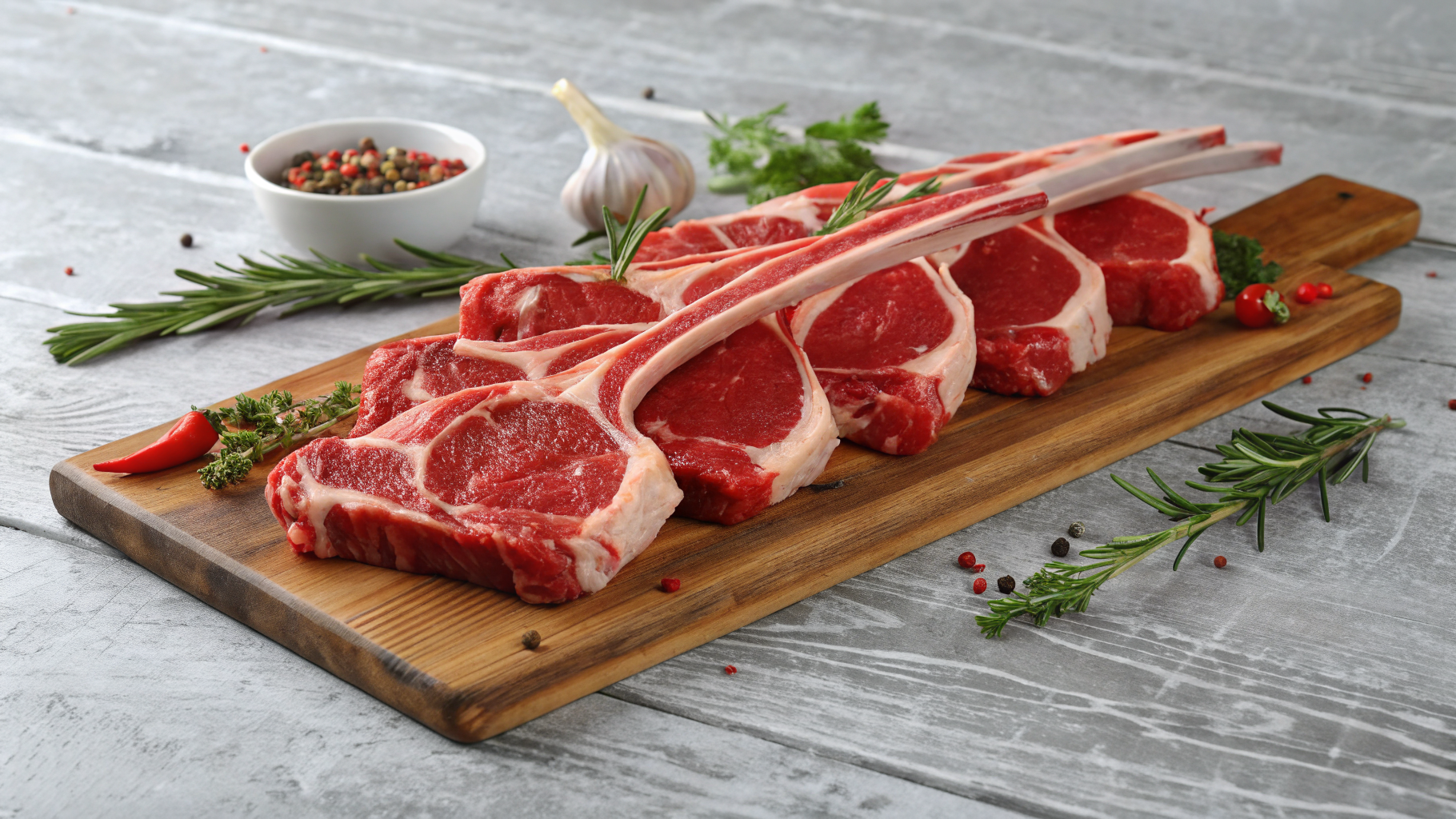
The Main Types of Lamb Chop and How Each One Works
Not all lamb chops are the same. Choosing the right one for your recipe is the first step to a great result.
- Loin chops — Cut from the lower back, these look like miniature T-bone steaks. They are lean, tender and cook quickly. Best pan-fried or grilled over high heat for 3–4 minutes per side.
- Rib chops (cutlets) — From the rack, these are the most elegant cut. The long frenched bone makes presentation easy. They have a thin fat cap that crisps beautifully on a hot griddle.
- Shoulder chops — Larger, slightly tougher and more affordable. The extra connective tissue means they reward slower cooking — braised in stock or baked low and slow until the meat falls from the bone.
- Chump chops — Cut from the rump between the loin and the leg. Good marbling gives them deep flavour. They work well grilled, baked or casseroled.
If you are unsure which cut to ask for, a good butcher will guide you based on your recipe and budget. See our guide to how to choose the best cuts of beef for a sense of how the same principles apply across different meats.
What Is the Best Way to Cook a Lamb Chop?
The best all-round method is a hot pan-sear followed by a short oven finish. Here is why it works so well and how to do it.
- Bring to room temperature. Take chops out of the fridge 20–30 minutes before cooking. Cold meat hitting a hot pan causes uneven cooking.
- Pat dry. Surface moisture steams rather than sears. A paper towel makes all the difference.
- Season generously. Salt both sides immediately before cooking — or up to an hour ahead if you want a drier surface.
- Sear on high heat. Use a cast-iron or stainless-steel pan with a small amount of oil that can handle high temperatures. Sear 2–3 minutes per side until a deep brown crust forms.
- Finish in the oven at 180 °C (fan) for thicker chops (3–4 minutes for medium). Thinner rib cutlets are usually done after searing alone.
- Rest before serving. Let chops rest on a warm plate for 3–5 minutes so the juices redistribute. Cutting straight away loses them on the board.
For a full recipe walk-through with timings and sides, visit our post on 5 Easy Lamb Chop Recipes the Whole Family Will Ask For Again.

Is It Best to Fry or Bake Lamb Chops?
Both methods work — the choice depends on the cut and the result you want.
Pan-frying (or griddling) is faster and produces a better crust, which means more flavour from the Maillard reaction. It suits thinner cuts like rib cutlets and loin chops. The risk is overcooking the outside before the centre reaches temperature.
Baking gives more even, gentle heat. It suits thicker shoulder or chump chops, especially when you add liquid and cover the dish. Cooked this way at around 160–170 °C for 45–60 minutes, shoulder chops become genuinely tender.
The combination method — sear first, oven second — gives you the best of both. You get the crust from frying and the controlled internal temperature from the oven. Most chefs and butchers recommend this for loin chops of any meaningful thickness.
What Seasoning Is Good for Lamb?
Lamb has a rich, slightly gamey flavour that pairs well with both fresh herbs and warm spices. You do not need to use all of them at once — choose a direction and keep it coherent.
- Rosemary and garlic — The classic. Crush a garlic clove and press it into the fat with a sprig of rosemary before searing. The fat carries the flavour into the meat.
- Cumin, coriander and paprika — A North African-inspired spice rub that works well on chump or shoulder chops. Mix with a little olive oil and rub in an hour before cooking.
- Mint — Often served as a sauce rather than a marinade, but fresh mint chopped into a yoghurt dressing alongside the cooked chop is a lighter finish.
- Lemon zest and oregano — A Greek-style approach. Bright, sharp and quick. Works particularly well on rib cutlets destined for the grill.
- Salt and black pepper alone — When the lamb is fresh and high quality, simplicity is often the right call. Season well and let the meat do the work.
For marinade timing: 1–2 hours is enough for most rubs and marinades. Overnight works for yoghurt-based marinades on shoulder chops, where the acidity helps tenderise the muscle fibres.
Looking for specific recipe ideas? Our post on 5 Crowd-Pleasing Lamb Chop Meals the Whole Family Will Ask For Again shows you exactly how to put these seasonings to work in complete meals.
Can Diabetics Have Lamb Chops?
Yes — lamb chops are a reasonable choice for most people managing diabetes, because they contain no carbohydrates and are a good source of protein and iron. Protein slows digestion and helps prevent blood sugar spikes after a meal.
Lamb does contain saturated fat, particularly in fattier cuts like shoulder. For that reason, loin chops or rib cutlets with the visible fat trimmed are a leaner option. Grilling or baking rather than frying in oil also reduces overall fat intake.
The bigger factor for a diabetic meal is what accompanies the chops. Pairing lamb with low-glycaemic-index (GI) vegetables — such as green beans, cauliflower, roasted courgette or a leafy salad — keeps the overall meal well-balanced. Avoid starchy sides in large portions if blood sugar control is a priority.
As with any dietary question specific to a health condition, the guidance of a registered dietitian or GP takes precedence over general food advice. The Diabetes UK website provides evidence-based eating guidance for people managing type 1 and type 2 diabetes.

Where to Buy Quality Lamb Chops
The quality of the lamb you start with shapes the result more than any technique. Here is what to look for when buying.
- Colour: Fresh lamb should be pink to light red, not grey or brown. Older, darker meat is not necessarily unsafe, but flavour and texture will be different.
- Fat: A creamy-white fat covering is a sign of a well-fed, younger animal. Yellow fat can indicate older mutton.
- Smell: Mild and clean. Any sour or ammonia-like note is a reason to walk away.
- Cut to order: Ask your butcher for the thickness you want. Chops cut to 2.5–3 cm give the best sear-to-centre ratio without drying out.
If you are searching for halal butchers near you, provenance and traceability matter too. A dedicated halal butcher sources animals slaughtered according to Islamic requirements and can usually tell you exactly where the lamb came from. Read more about what to look for in our post: Why Families in North London Choose a Halal Butcher — And What to Look For.
At Capital Butcher in Edmonton, North London, our counter stocks fresh lamb chops cut daily. You can ask for any cut, any thickness — and if you want something specific, we will sort it. Find out more about your local family butcher in Edmonton, or visit the Capital Butcher homepage to see what we have in stock.

Frequently asked questions
What is the best way to cook a lamb chop?
The most reliable method is to sear lamb chops in a very hot cast-iron pan for 2–3 minutes per side to build a crust, then finish in a 180 °C oven for 3–4 minutes for thicker cuts. Always rest the chops for at least 3 minutes before serving so the juices stay in the meat rather than on the board.
Is it best to fry or bake lamb chops?
For thin cuts like rib cutlets and loin chops, pan-frying gives a better crust and more flavour. For thicker shoulder or chump chops, baking low and slow produces more tender results. The combination method — sear first, oven finish second — works best for most home cooks dealing with loin chops of any real thickness.
Can diabetics have lamb chops?
Lamb chops contain no carbohydrates and are a good source of protein, which makes them a reasonable option for most people managing diabetes. Leaner cuts such as loin chops with fat trimmed are preferable, and pairing them with low-GI vegetables rather than starchy sides helps keep the overall meal balanced. Always follow the advice of your GP or dietitian for personal guidance.
What seasoning is good for lamb?
Rosemary and garlic is the classic pairing, but cumin, coriander and paprika work beautifully for a spice-rubbed result. Lemon zest with oregano suits grilled rib cutlets. For very fresh, high-quality lamb, salt and black pepper alone is often the best choice — the meat's natural flavour does the heavy lifting.
How long should I marinate lamb chops?
For dry rubs and oil-based marinades, 1–2 hours at room temperature is enough to impart flavour. Yoghurt-based marinades can go overnight in the fridge, especially on shoulder chops, because the mild acidity helps tenderise the muscle fibres. Avoid very acidic marinades for longer than a few hours on delicate rib cutlets — the acid can turn the surface texture mushy.
Where can I buy fresh halal lamb chops near me?
A dedicated halal butcher is your best option because the lamb is sourced and slaughtered to halal standards, is usually fresher than supermarket equivalents, and you can ask for cuts to your exact specification. Capital Butcher in Edmonton, North London, stocks fresh lamb chops daily and cuts to order.